info@leiser.co.uk


When inflation rises, people start asking the same old question in new ways: where can value hide when money feels like it’s melting? Some turn to gold, others to real estate, and a smaller but persistent group looks toward diamonds. These stones have carried wealth across centuries, crossed borders in pockets, and symbolized status long before stock markets existed. Still, the idea of diamonds as an inflation hedge deserves a closer look. Romance and reality don’t always sit at the same table.
Unlike cash, diamonds are tangible assets. They don’t depend on a central bank, they can’t be printed overnight, and they often hold emotional as well as financial significance. However, their relationship with inflation is more complicated than many people assume. Historical performance shows periods of strong resilience, but it also reveals limits, delays, and market-specific risks that investors often overlook.
Why Inflation Changes the Way People View Diamonds
Inflation reduces purchasing power. In simple terms, your money buys less than it did before. When food, housing, fuel, and luxury goods all become more expensive, people naturally look for assets that may preserve value over time. Diamonds enter this conversation because they are scarce, durable, and globally recognized.
Think of inflation like slow rust on savings. A bank account with low interest may quietly lose strength year after year. Physical assets often feel safer because they exist outside that erosion. Diamonds, especially high-quality natural stones, can appear attractive because supply is limited and replacement costs tend to rise when mining, labor, and transportation become more expensive.
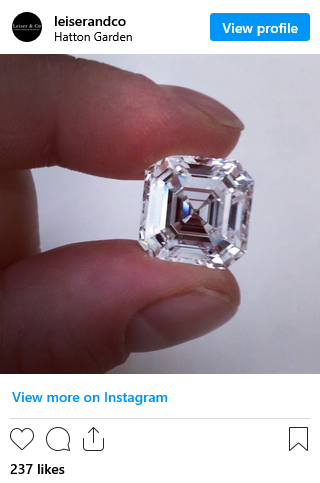
Yet diamonds are not like gold bars with daily market pricing. Their value depends on cut, clarity, carat, color, certification, brand influence, and buyer sentiment. Two stones that look similar to the untrained eye may have dramatically different prices. That complexity matters when inflation enters the picture.
Looking Back: Diamonds During the High Inflation of the 1970s
The 1970s remain one of the most discussed inflation periods in modern financial history. Oil shocks, currency instability, and rising consumer prices created widespread uncertainty across major economies. During this decade, hard assets gained attention, and diamonds were part of that movement.
High-quality investment-grade diamonds, particularly larger stones with strong rarity characteristics, saw notable price increases. Wealthy buyers viewed them as portable stores of value. In some regions, polished diamonds traded almost like discreet wealth insurance. Dealers and collectors often focused on stones with exceptional scarcity rather than mass-market jewelry pieces.
However, context matters. The diamond market of the 1970s looked very different from today’s market. Supply structures were tighter, fewer certification systems existed, and pricing transparency was limited. Major producers exercised stronger control over distribution, which influenced price stability. As a result, historical gains from that era cannot be copied neatly into modern expectations.
The 1980s Correction: A Reminder That Diamonds Aren’t Guaranteed Protection
After strong growth came a hard lesson. In the early 1980s, inflation pressures changed, speculative buying cooled, and parts of the diamond market corrected sharply. Some investors who entered late discovered that diamonds do not move in straight lines.
This period exposed a common misunderstanding: diamonds are not automatically liquid. Selling quickly often means accepting a discount. Retail buyers usually pay far more than resale markets offer. A diamond bought in a luxury boutique may carry branding, presentation, and retail margin that disappear the moment resale begins.
It was a bit like buying a designer suit. It may be excellent quality, but the resale market values it differently than the original store did. Inflation protection works poorly if the exit path is narrow. The 1980s showed that timing and asset quality matter just as much as inflation itself.
How Diamonds Performed During the 2008 Financial Crisis
The global financial crisis of 2008 created a different test. This was not classic runaway inflation at first. Instead, it was a severe liquidity shock followed by broader monetary intervention. Luxury demand weakened sharply as consumer confidence dropped.
Diamond prices, especially for commercial-grade stones, fell under pressure because buyers stepped back and financing tightened across the supply chain. Retail jewelry demand slowed, and manufacturers adjusted cautiously. Investment-grade stones performed better than average-quality inventory, but the market as a whole showed vulnerability.
This moment highlighted an important truth: diamonds respond to both inflation and consumer confidence. If inflation rises while discretionary spending falls, lower-tier diamonds may struggle. Rare stones with collector appeal often behave differently because their buyers operate in another financial universe entirely.
Recent Inflation Trends and the Post-2020 Market
After 2020, inflation returned to center stage across many economies. Supply chain disruptions, rising energy costs, monetary stimulus, and geopolitical uncertainty all contributed to renewed price pressure. Once again, investors revisited hard assets, including diamonds.
Natural diamonds experienced mixed performance. Certain categories, especially larger certified stones and rare fancy-color diamonds, attracted stronger interest. At the same time, the rise of lab-grown diamonds changed consumer behavior. Lab-grown stones reduced pricing power in parts of the bridal and commercial jewelry market, creating a new distinction between emotional luxury purchases and long-term value preservation.
This is where nuance becomes essential. Inflation may support natural diamond pricing in some segments, but lab-grown competition can weaken resale expectations for standard stones. A one-carat commercial diamond and a rare pink diamond live in completely different financial neighborhoods.
Which Diamonds Historically Hold Value Better
Not all diamonds behave equally under inflation pressure. Historical data consistently points toward stronger resilience in stones with rarity, certification, and international demand.
Typically, these include:
- Larger stones with higher carat weight
- Excellent cut quality
- Strong color and clarity grades
- Certification from respected laboratories
- Natural fancy-color diamonds with genuine scarcity
- Proven auction or collector demand
By contrast, heavily included stones, poorly cut diamonds, or mass-market retail jewelry often struggle in resale. The diamond itself may be real, but market appetite may be weak.
It helps to think of it like real estate. Prime property in a strong location behaves differently from an average apartment in an oversupplied district. Both are property, yet their performance can be worlds apart.
Diamonds Compared With Gold During Inflation
Gold usually wins the headline battle because it offers greater transparency and liquidity. Prices update constantly, global markets are deep, and transaction structures are straightforward. Diamonds are more private and more complex.
Historically, gold often reacts faster to inflation fears. Diamonds tend to move more slowly and depend more heavily on buyer behavior, luxury demand, and quality-specific scarcity. This makes diamonds less efficient as a short-term inflation hedge but potentially useful for wealth preservation in select cases.
Gold is like a public highway—busy, visible, and easy to navigate. Diamonds are more like private roads through old estates. Valuable, yes, but you need the right map and the right guide.
The Hidden Costs Investors Often Ignore
Many people discussing diamonds and inflation focus only on headline price appreciation. They forget friction. Insurance, certification, secure storage, dealer spreads, and resale commissions all affect actual returns.
Retail markup creates another major issue. A buyer may pay significantly above wholesale market value. If inflation rises 10 percent but the resale discount is 25 percent, the protection feels less impressive.
Emotional buying also clouds judgment. Jewelry purchases often mix sentiment with finance. There is nothing wrong with that, but an engagement ring should not be evaluated the same way as an investment-grade stone purchased for wealth preservation.
History shows that confusion between these two purposes creates disappointment more often than profit.
What Historical Data Really Suggests
Diamonds can preserve value during inflation, but they do not behave like a universal shield. Their performance depends heavily on quality, timing, liquidity, and market structure. Exceptional stones have shown resilience across decades, while ordinary retail diamonds often perform far less impressively.
The strongest lesson from history is simple: rarity matters more than ownership alone. Buying any diamond is not the same as holding an inflation-resistant asset. The stone must have qualities the market continues to chase, even when economic weather turns ugly.
Diamonds may sparkle under showroom lights, but inflation tests them under harsher conditions. Some shine brighter. Others just look expensive.
For anyone studying historical performance, the conclusion is clear. Diamonds can play a role in wealth preservation, but only when chosen with discipline, not dazzled impulse. In this market, beauty helps—but scarcity pays the bills.