info@leiser.co.uk

Diamonds have always carried a special kind of gravity. They symbolize love, wealth, prestige, and sometimes pure financial strategy. For decades, natural diamonds dominated the jewelry world with very little competition. Then lab-grown diamonds entered the scene and changed the conversation completely. What once looked like a niche scientific achievement has now become a major force in the global diamond market.
Today, buyers don’t just ask about carat, clarity, color, and cut. They also ask where the diamond came from and whether it was mined from the earth or created in a laboratory. That single question has started to reshape pricing structures across the industry. Natural diamond prices are no longer influenced only by rarity and mining costs. They now respond to shifting consumer preferences, retail competition, and the rapid growth of lab-created alternatives.
Understanding this relationship helps both buyers and sellers make smarter decisions. The rise of lab-grown diamonds is not simply a trend. It is a structural change that continues to affect how natural diamonds are valued around the world.
What Are Lab-Grown Diamonds and Why Do They Matter?
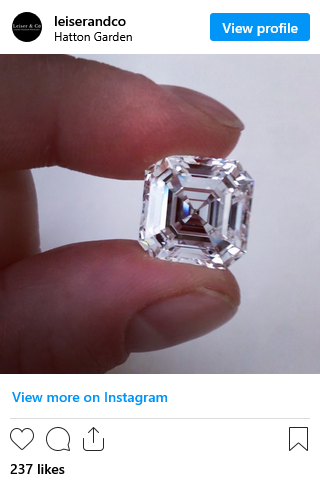
Lab-grown diamonds are real diamonds. They are not cubic zirconia or cheap imitations pretending to be something else. They have the same chemical composition, the same crystal structure, and often the same visual appearance as natural diamonds. The main difference is origin.
Natural diamonds formed deep within the earth over billions of years under extreme heat and pressure. Lab-grown diamonds are produced in controlled environments using advanced technology such as High Pressure High Temperature (HPHT) or Chemical Vapor Deposition (CVD). Think of it like growing a rose in a greenhouse instead of finding one in the wild. It is still a rose, but the journey is very different.
This matters because consumers have started to question whether rarity alone should justify significantly higher prices. When two diamonds look nearly identical to the naked eye, many buyers naturally ask why one costs far more than the other.
That question sits at the heart of the pricing shift.
Price Gaps Between Lab-Grown and Natural Diamonds
One of the strongest market disruptors is the price difference itself. Lab-grown diamonds often sell for 60 to 85 percent less than comparable natural diamonds. That gap is hard to ignore, especially for younger buyers who are balancing luxury purchases with rising living costs.
Imagine a couple shopping for an engagement ring. They can buy a one-carat natural diamond for several thousand dollars or choose a larger lab-grown diamond with similar visual appeal for far less. For many people, the decision becomes practical rather than emotional.
This pricing pressure forces retailers to rethink how they present natural diamonds. In the past, the natural stone often sold itself through prestige and tradition. Now jewelers must explain value more carefully. They need to emphasize rarity, long-term perception, and resale potential rather than relying only on the word “diamond.”
As lab-grown options become more accessible, natural diamond pricing faces greater scrutiny at every level of the market.
How Consumer Perception Shapes Natural Diamond Value
Price is never just about numbers. Perception plays a huge role, especially in luxury goods. A designer handbag and a regular tote both carry your things, but one tells a different story. Diamonds work the same way.
Natural diamonds still hold strong emotional and symbolic value for many buyers. People often associate them with permanence, geological rarity, and generational wealth. Some families view a natural diamond as an heirloom rather than a purchase.
However, lab-grown diamonds appeal to a different mindset. Many consumers see them as modern, ethical, and financially sensible. They like the idea of getting more size for less money without sacrificing beauty. Others feel more comfortable with the environmental and sourcing transparency often linked to lab-grown production.
As these views evolve, natural diamond sellers must protect value through storytelling and education. If buyers stop seeing natural diamonds as rare treasures and start seeing them as overpriced versions of the same product, prices can soften quickly.
Perception, in this market, can move faster than mining trucks.
Pressure on Mid-Range Natural Diamonds
Not all natural diamonds feel the same level of impact. The strongest pressure often falls on mid-range stones rather than rare investment-grade gems.
High-end collectors who buy exceptional natural diamonds usually care deeply about rarity, provenance, and auction value. They are less likely to switch to lab-grown stones because their goals go beyond appearance. A rare pink diamond is not competing with a standard lab-created white stone.
At the lower and middle ends of the market, however, substitution happens fast. Standard engagement rings, fashion jewelry, and everyday luxury purchases face direct competition. A buyer choosing between a commercial-grade natural diamond and a lab-grown equivalent may prioritize budget over origin.
This creates a squeeze. Mid-range natural diamonds can struggle to maintain historical price levels because lab-grown alternatives offer strong visual value at lower cost. It is a bit like trying to sell bottled rainwater next to a clean mountain spring at half the price.
Consumers start asking difficult questions.
Retail Strategies and Market Adjustments
Jewelry retailers have responded in several ways. Some stores now carry both natural and lab-grown diamonds side by side. This allows them to serve different customer preferences without losing sales entirely. Others separate the two categories clearly to protect the prestige of natural stones.
Branding has become more important than ever. Natural diamonds are often marketed with language focused on rarity, emotional significance, and legacy. Lab-grown diamonds are promoted with themes of innovation, affordability, and sustainability.
Some natural diamond producers have also adjusted supply to support prices. Limiting production can help prevent oversupply, which would push prices lower. It is a balancing act, much like keeping too much fruit from flooding a market and driving down the price of every apple.
Meanwhile, certification and transparency have become critical. Buyers want to know exactly what they are purchasing. Trust is now part of the price tag.
Resale Value and Investment Concerns
Another major factor in pricing is resale value. Natural diamonds have historically carried stronger resale potential, although even they often sell for less on the secondary market than many buyers expect.
Lab-grown diamonds generally experience steeper resale challenges. Because production can increase and technology continues to improve, future supply may keep expanding. When supply rises and exclusivity falls, resale prices often weaken.
This affects how consumers think about the original purchase. Someone buying a diamond as a sentimental gift may not care much about resale. Someone viewing it as a store of value probably will.
Natural diamonds still benefit from this distinction. Their geological rarity supports a stronger long-term narrative, especially for premium stones. Yet if enough consumers stop caring about resale and focus only on present value, natural prices may continue to face downward pressure.
Sometimes the market behaves less like romance and more like real estate.
The Future Relationship Between Both Markets
Lab-grown and natural diamonds are unlikely to eliminate each other. Instead, they are creating two parallel markets with different audiences and different value systems.
Natural diamonds may become more concentrated in luxury, heritage, and investment-focused segments. Lab-grown diamonds may continue dominating practical jewelry purchases where affordability matters most. This separation could stabilize pricing over time, but the transition remains active.
Technology will also play a role. As lab-grown production becomes more efficient, prices may continue falling. That could increase pressure on natural diamonds, especially in mainstream retail. On the other hand, stronger branding and limited supply may help natural stones preserve premium positioning.
The market is not choosing one winner. It is rewriting the rules for both.
For buyers, this means more options. For sellers, it means sharper competition. For the diamond industry, it means the old playbook no longer works.
Conclusion
The impact of lab-grown diamonds on natural diamond prices reaches far beyond simple competition. It changes consumer expectations, retail strategies, pricing psychology, and the long-term definition of value itself.
Natural diamonds still hold powerful emotional and financial significance, especially in the premium market. Their rarity, history, and symbolism remain difficult to replicate. Yet lab-grown diamonds have introduced a strong challenge by offering real diamond beauty at a much lower cost.
As a result, natural diamond prices face more pressure, particularly in the mid-range segment where buyers compare practicality against tradition. The market has become less about automatic prestige and more about informed choice.
In the end, diamonds are still diamonds. But now, the question is not just how they sparkle. It is also how they justify their price.