info@leiser.co.uk

Diamonds carry an aura of certainty. People often assume they can spot a real stone with a quick glance or a simple trick. In reality, authentication without a lab involves probability rather than absolute proof. You can gather clues. You can rule out obvious imitations. Yet, without advanced equipment, complete verification remains just out of reach. That said, learning how diamonds behave gives you a strong advantage. Their optical and physical traits stand apart from most substitutes. If you observe carefully, patterns begin to emerge. Think of it like reading subtle signals rather than looking for a single answer. Each test adds another piece to the puzzle. While no single method guarantees accuracy, combining several approaches can help you form a well-informed judgment.
Visual Inspection: First Impressions Matter
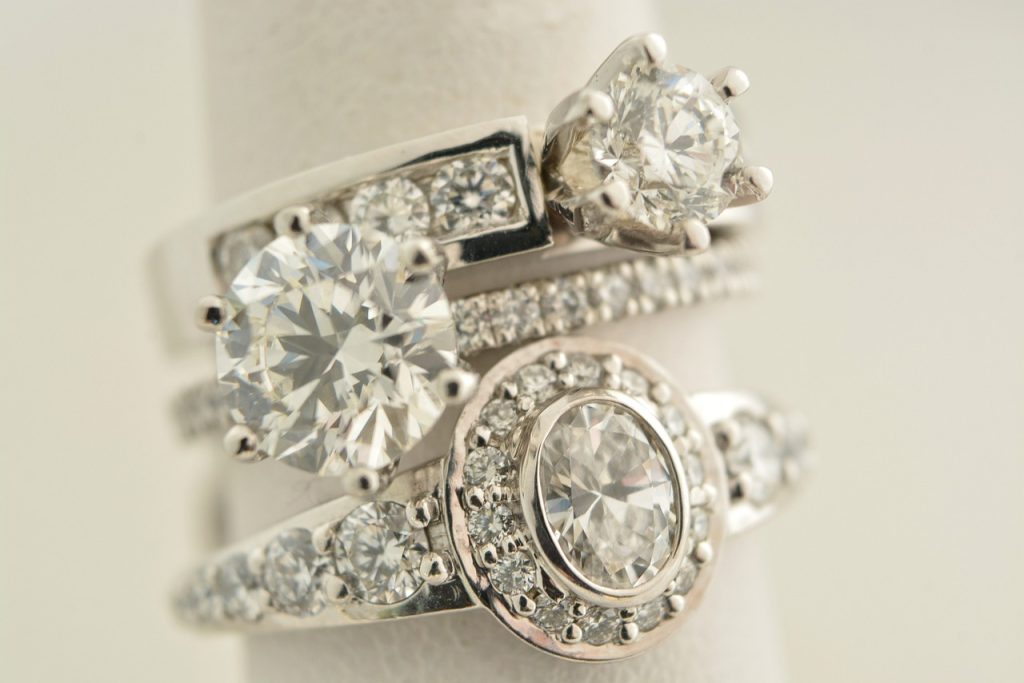
Start with your eyes. A diamond interacts with light in a distinct way. It doesn’t just sparkle. It produces a balanced mix of white brilliance and rainbow flashes. When you tilt the stone under a light source, you may notice sharp reflections that appear almost crisp. Glass or cubic zirconia often looks softer or overly colorful by comparison. Look closely at the edges as well. Genuine diamonds tend to have sharp facet junctions, while imitations may show rounded or worn edges.
Now consider clarity. Most natural diamonds contain tiny inclusions. These can look like small feathers or clouds when viewed under magnification. A perfectly flawless stone might raise suspicion unless it comes with documentation. For example, if you examine a stone with a basic jeweler’s loupe and see absolutely no internal features, it may not be what it claims to be. Still, visual inspection alone won’t seal the deal. It only sets the stage.
The Fog Test: A Quick Thermal Check
Here’s a simple test you can try almost anywhere. Hold the stone close to your mouth and gently breathe on it. Just like fogging a mirror. A real diamond disperses heat quickly, so the fog should vanish almost instantly. If the mist lingers for a second or two, that could suggest a different material.
Why does this happen? Diamonds conduct heat extremely well. They don’t hold onto warmth. Other stones, including many simulants, retain heat longer. This difference creates a visible delay in how quickly the fog clears. However, keep expectations realistic. Environmental factors can affect results. Humidity and temperature may alter how the test behaves. Use it as one indicator, not a final verdict.
Water Test: Density in Action
Drop the loose stone into a glass of water. It sounds almost too simple. Yet density plays a role here. Diamonds are relatively dense, so they tend to sink quickly to the bottom. Some imitations may float or sink more slowly.
This test works best with unmounted stones. Settings can interfere with how the object behaves in water. Also, several diamond substitutes share similar density levels. That means they will sink as well. While the test can help eliminate obvious fakes, it won’t distinguish between high-quality simulants and genuine diamonds. Still, it adds another layer of evidence.
Light Reflection Test: Reading the Sparkle
Light tells a story if you know how to read it. Place the stone under a lamp and observe how it reflects light. Diamonds produce strong white light, known as brilliance. They also create flashes of color, called fire. The key lies in balance.
Try this simple exercise:
- Hold the stone above printed text
- Look through the stone from the top
- Check if you can clearly read the letters
A real diamond bends light so intensely that you shouldn’t see readable text through it. If the letters appear clear or only slightly distorted, the stone may be something else. This effect comes from the diamond’s high refractive index. It scrambles light paths in a way that makes direct viewing difficult.
UV Light Reaction: A Subtle Clue
Under ultraviolet light, many diamonds emit a soft blue glow. This phenomenon, called fluorescence, doesn’t appear in all diamonds. Still, it can offer a helpful clue. If you expose the stone to UV light and notice a faint blue hue, that leans toward authenticity.
However, don’t treat this as a decisive test. Some real diamonds show no fluorescence at all. On the flip side, certain synthetic stones may glow as well. Think of it as a supporting detail rather than a main argument. When combined with other observations, it strengthens your overall assessment.
Scratch Resistance: Proceed with Caution
Diamonds rank at the top of the hardness scale. They resist scratches better than any other natural material. This fact often leads people to try scratch tests. For instance, dragging the stone across glass to see if it leaves a mark.
While the logic makes sense, the method carries risk. You could damage both the surface and the stone’s setting. Also, some simulants can scratch glass too. That means the test doesn’t offer clear differentiation. Instead of performing physical scratch tests, it’s wiser to rely on safer observational methods. Hardness matters, yet it’s not something you need to prove through force.
Metal Settings and Markings: Context Clues
Sometimes the answer lies not in the stone but in its surroundings. Check the setting for stamps or engravings. Marks like “18K,” “14K,” or “PT” suggest precious metals. Jewelers rarely place real diamonds in low-value materials.
While this doesn’t confirm authenticity, it provides context. A high-quality setting increases the likelihood that the stone is genuine. On the other hand, a cheap or unmarked setting might raise questions. Of course, exceptions exist. Vintage pieces and custom designs can blur these assumptions. Still, context often speaks louder than isolated details.
Combining Methods for Better Confidence
No single test tells the whole story. That’s the central idea to remember. Each method offers a fragment of insight. When you combine them, a clearer picture begins to form.
For example:
- A stone that clears fog instantly
- Shows sharp reflections
- Distorts text strongly
- Sinks quickly in water
This combination leans toward authenticity. Add UV fluorescence or visible inclusions, and your confidence grows. Yet uncertainty always remains without professional tools. That’s part of the process. Authentication outside a lab relies on pattern recognition rather than absolute certainty.
When Professional Verification Becomes Necessary
At some point, informal testing reaches its limits. High-value stones, inherited jewelry, or investment pieces often require definitive answers. That’s where professional gemological analysis comes into play. Experts use advanced instruments to measure thermal conductivity, refractive index, and other precise properties.
While at-home methods can guide initial impressions, they can’t replace laboratory confirmation. Think of them as a filter. They help you decide whether further testing makes sense. In many cases, that’s exactly what you need. A practical first step that saves time and avoids unnecessary costs.