info@leiser.co.uk

When you look at a diamond and think, “Wow, that sparkles,” you’re reacting to light performance. It’s not magic. It’s physics at work. Light performance describes how a diamond handles light once it enters the stone. The better the diamond manages that light, the more brilliance you see.
Three main visual effects define this performance:
-
Brilliance – the white light reflected back to your eye
-
Fire – the rainbow flashes you see when the stone moves
-
Scintillation – the sparkle pattern created by contrast and motion
Together, these elements create the lively appearance people love. A diamond can have excellent color and clarity, yet still look dull if it handles light poorly. That’s because light performance often influences beauty more than any other factor. In many cases, you notice sparkle long before you notice subtle color differences.
How Light Travels Inside a Diamond
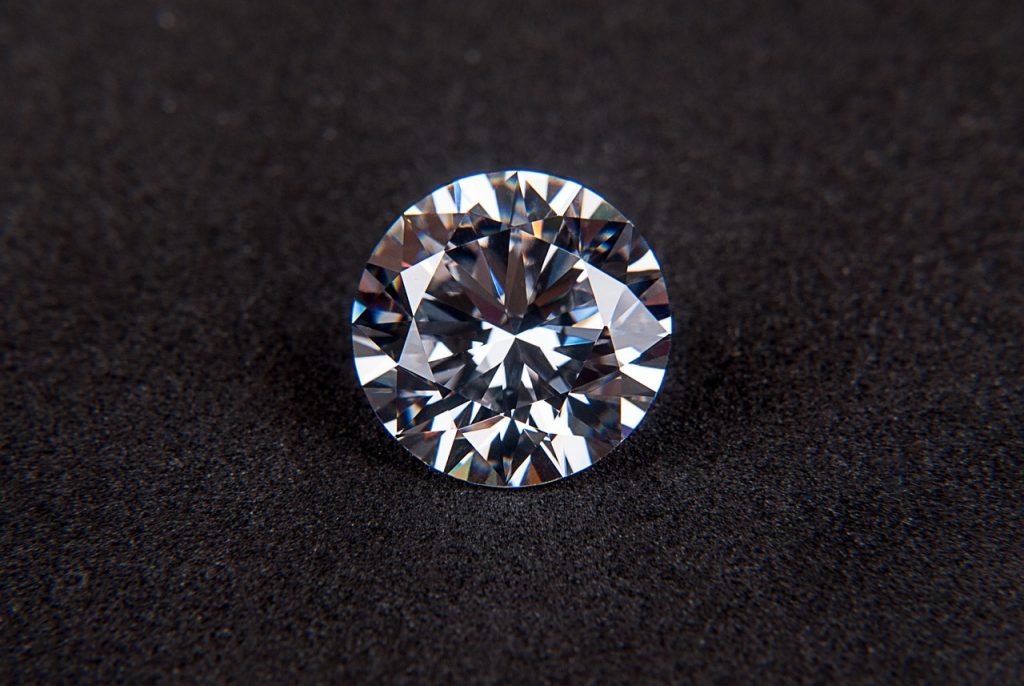
Light doesn’t simply bounce off the top of a diamond. It enters through the table, bends as it moves through the crystal, reflects off internal facets, then returns to your eye. If the angles are precise, most of that light exits through the top. If not, it leaks through the sides or bottom.
Think of a diamond like a hall of mirrors. When the mirrors align perfectly, light ricochets efficiently. When they don’t, light escapes. That escape reduces brightness.
Total internal reflection drives brilliance. Diamond has a high refractive index, which means it bends light dramatically. This bending helps trap and redirect light inside the stone. However, the cut must support that process. Even slight deviations in pavilion angle or crown height can disrupt reflection patterns.
In short, geometry matters. A fraction of a millimeter can change everything.
The Cut: The Architect of Brilliance
Among the traditional “Four Cs” established by the Gemological Institute of America, cut plays the most critical role in light performance. While color and clarity describe what the diamond is, cut determines how it behaves.
Cut includes:
-
Proportions
-
Symmetry
-
Polish
-
Facet alignment
A well-cut diamond maximizes light return. A poorly cut one allows light to leak. Even a large stone can look lifeless if cut too shallow or too deep.
For example, imagine two identical diamonds in color and clarity. One has ideal proportions. The other doesn’t. Under the same lighting, the well-cut stone will appear brighter and more dynamic. The other may look sleepy by comparison.
That difference often surprises buyers. Size alone doesn’t create impact. Light performance does.
Facet Design and Optical Precision
Facet arrangement influences how light disperses into spectral colors. The classic round brilliant cut, with 57 or 58 facets, was engineered specifically to optimize brilliance and fire. Its proportions evolved over decades of optical research.
Other shapes, such as cushion or emerald cuts, reflect light differently. Emerald cuts emphasize broad flashes instead of intense sparkle. Cushion cuts create softer scintillation patterns. Neither is inferior. They simply deliver different visual effects.
Precision matters at a microscopic level. Even minor symmetry issues can disrupt sparkle patterns. That’s why advanced manufacturers use computer modeling and ray tracing. These tools predict how light will move before the diamond is even polished.
Technology now complements craftsmanship. The best results come from both.
Light Leakage: The Hidden Enemy
Sometimes a diamond looks bright from one angle yet dark from another. That inconsistency often signals light leakage. When light escapes through the pavilion instead of reflecting upward, the stone loses brightness.
You can visualize leakage using specialized imaging tools such as ASET scopes. These tools map how efficiently a diamond returns light. Areas of strong return show in red or green. Leakage appears white or dark.
Without proper light return, brilliance fades. Even high-clarity diamonds can appear glassy instead of vibrant. That’s why experts often prioritize cut quality when assessing overall beauty.
In practical terms, a well-performing diamond stays lively in varied lighting. Office lighting, candlelight, daylight. It adapts. Poor performers need very specific lighting to shine.
Human Perception and Sparkle
Light performance isn’t just technical. It’s psychological. The human eye naturally responds to contrast and movement. Scintillation creates that lively contrast. When you move your hand, flashes appear and disappear. That dynamic sparkle captures attention.
Interestingly, our brains interpret high contrast patterns as more brilliant. Diamonds with balanced dark and bright areas often look more vivid than stones with uniform brightness. Too much uniform light can appear flat.
Designers understand this. They don’t aim for maximum brightness alone. They aim for balanced sparkle.
You might notice this effect when comparing stones side by side. One seems to “dance.” The other simply shines. That dancing effect comes from carefully engineered facet contrast.
Environmental Lighting and Real-World Performance
No diamond exists in a vacuum. Lighting conditions shape what you see. Spotlights emphasize fire. Diffused daylight highlights brilliance. Soft indoor lighting may reduce sparkle.
Because of this, evaluating diamonds under multiple lighting conditions helps reveal true performance. Jewelry stores often use strong spotlights that exaggerate fire. That can look impressive. However, everyday lighting tells the fuller story.
A diamond with strong light performance adapts well across environments. It doesn’t rely on dramatic lighting to appear beautiful. Instead, it maintains brightness consistently.
You don’t just buy a stone for showroom lighting. You wear it in real life.
Why Light Performance Often Outweighs Other Factors
Color and clarity matter. However, most minor inclusions remain invisible without magnification. Slight color differences can also go unnoticed once mounted. Light performance, on the other hand, affects what you see instantly.
A perfectly colorless diamond with poor cut may look dull. A slightly tinted diamond with exceptional cut can appear more brilliant. Sparkle draws attention first.
For that reason, many gem professionals emphasize cut grading as a priority. It influences perceived size, brightness, and overall beauty.
In essence, light performance turns a diamond from a clear crystal into a living object of light.
Modern Grading and Light Analysis
Today, laboratories use sophisticated tools to assess cut and light behavior. The American Gem Society pioneered advanced cut grading systems based on light performance modeling. Their approach evaluates how efficiently a diamond handles light rather than relying only on proportion charts.
Meanwhile, the Gemological Institute of America introduced cut grading standards for round brilliant diamonds that consider brightness, fire, and scintillation together.
These grading systems aim to quantify what your eye perceives instinctively. While no grading report replaces personal observation, these tools provide objective benchmarks.
They bridge science and beauty.
Conclusion: Light Is the True Author of Brilliance
At its core, diamond brilliance begins and ends with light. The stone doesn’t generate sparkle on its own. It shapes and redirects light with precision. When cut proportions align correctly, light returns to your eye in vivid flashes. When they don’t, the effect weakens.
Understanding light performance changes how you evaluate diamonds. Instead of focusing only on size or clarity, you start asking how the stone interacts with light. That shift reveals why two diamonds of equal grade can look dramatically different.
In the end, brilliance isn’t accidental. It results from deliberate design, optical science, and expert craftsmanship working together. Light writes the story. The cut determines how well that story shines.